June (Kesäkuu) & July (Heinäkuu) 2024


And just like that…. June (188 miles) & July (230 miles) marathon training is complete. And in three short weeks, I’ll be running 26.2 miles through the streets of Helsinki, Finland.
Looking back on the 3+ months of training so far, I am proud of my marathon training dedication. Despite crazy travel plans, a mid-summer move, challenging work responsibilities, and balancing time with family and friends, I have not missed a single training run. With that being said, it definitely hasn’t been easy – I’ve had to shuffle runs around to fit into my schedule; my alarm goes off very early every morning to run; and I’ve started swapping out music playlists for audio books / podcasts because I’ve been getting very bored during some of the longer runs. But whenever I lack motivation or contemplate skipping a run, I remember why this marathon is so important.
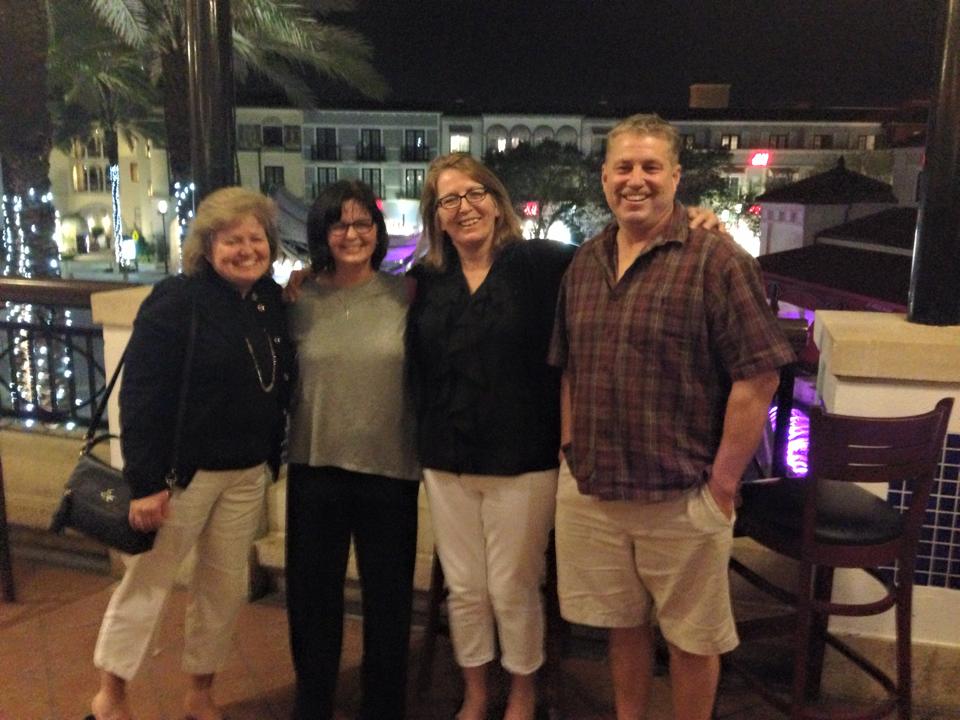
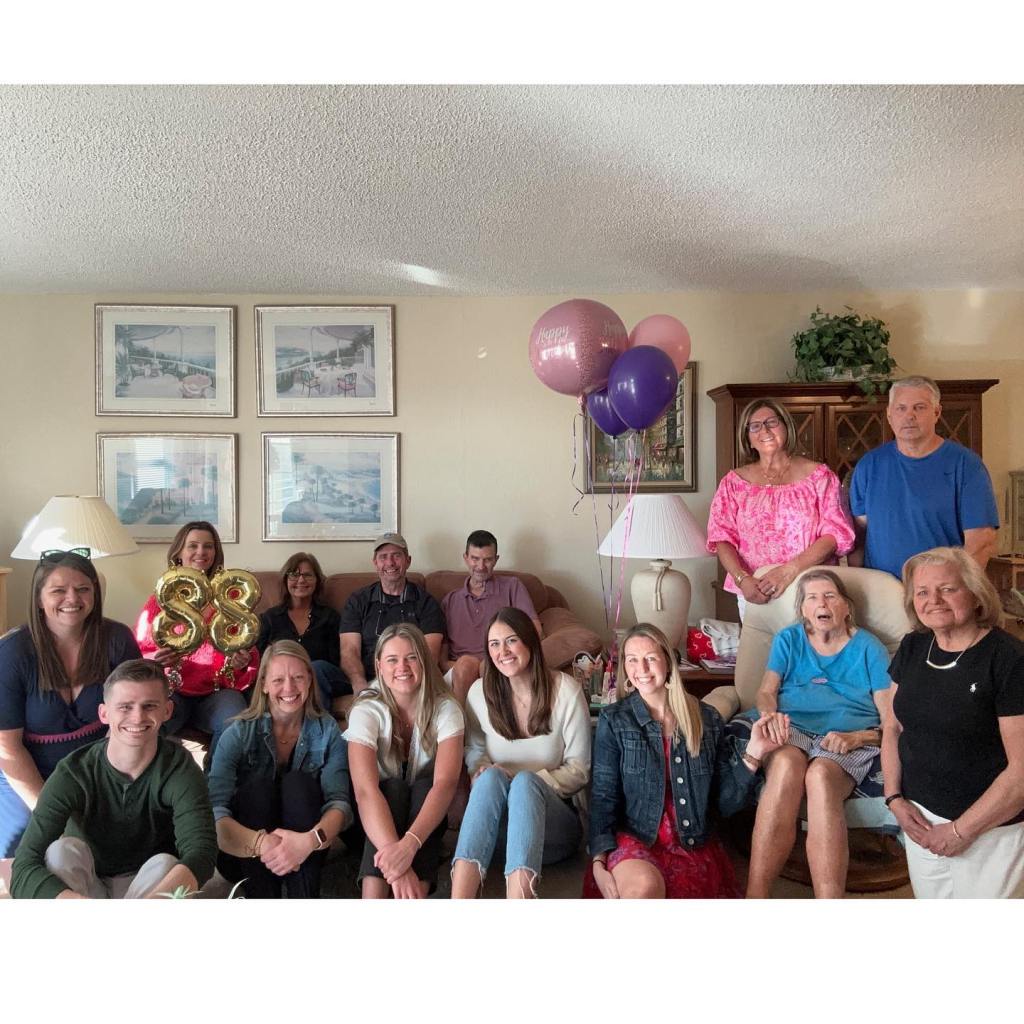
A family trip to Finland has been talked about for almost 10 years now. In January 2015, my mom, sisters, cousins and aunts on the Tirronen side (Tirronen is my mom’s maiden name) traveled to Lake Worth, FL to visit my nana and uncle to celebrate my nana’s 80th birthday; my nana is 100% Finnish. That first trip in 2015 has become an annual tradition where we all travel to FL every January for my nana’s birthday; January 2025 will be 10 years since that first trip and we will celebrate my nana’s 90th birthday.
During these annual trips, our family has gotten very close.. and through the years, we talked about planning a ‘Tirronen Finland Trip’. We would regularly brainstorm dates, but always had a hard time finding a date that worked well for everyone.
Fast forward to August 2023… I remember calling each of my siblings to tell them I was going to run the Helsinki, Finland Marathon in August 2024. And at the time, I told them I had three goals associated with this marathon: 1) to “finnish”, 2) to raise awareness and funds for Alzheimer’s disease, and 3) to channel my inner Finn and do my best to focus on things that bring me happiness.
Now fast forward again, this time to present day: August 2024. My three main marathon goals haven’t changed, but as I look forward to the final three weeks of training, I am more inspired than ever by my Finnish family. Over the course of the past year, I’ve seen family members overcome injuries, battle through some health challenges, and experience heartbreaks. I’ve also seen family members become a first time homeowner, fall in love, get engaged, and start new jobs. Through the ups and the downs, I’ve seen family members display incredible amounts of sisu; I’ve seen family members significantly inconvenience themselves to provide love and support to each other; and I’ve also witnessed how everyone celebrates each other’s ‘win’, no matter how big or how small that win is. I am very grateful and very inspired by my #FinnFam..
So in three weeks, when I run 26.2 miles on August 24th in Helsinki Finland, I’m running towards the “finnish” line, I’m running towards a cure for Alzheimer’s, I’m running to maintain a Finnish-level of happiness, and I’m running for my very inspiring, Finnish family.
————————————————————————
Next up: Alzheimer’s 101: Alzheimer’s Caregivers
————————————————————————
Alzheimer’s 101 – Alzheimer’s Caregivers
“The caregivers in my life have been incredible. They lift me up and keep me moving forward. Their strength and dedication inspire me every day.” – Pat Summitt, former head coach of the University of Tennessee Lady Volunteers basketball team. Pat was diagnosed with early-onset Alzheimer’s disease in 2011 and passed away from the disease in June 2018.
An Alzheimer’s diagnosis is devastating for the person receiving the diagnosis and also family members and friends who will serve as primary or secondary caregivers for that individual. In past blog posts, we’ve talked about how Alzheimer’s impacts the individual who is diagnosed; this month we will talk briefly about the caregiver’s experience with Alzheimer’s.
From the Alzheimer’s diagnosis to the late-stages of Alzheimer’s, the role as a caregiver changes. Below is some high-level information on what to expect during the early, middle, and late stages of Alzheimer’s.
- Early-Stage Caregiving: The person in the early-stage may need help with keeping appointments, remembering words or names, recalling familiar places or people, managing money, keeping track of medications, transportation, and planning / organizing. Emotions the caregiver may experience in the early-stage are denial, fear, anxiety, anger / frustration, and grief. The individual living with Alzheimer’s will likely experience some or all of these emotions as well. For the caregiver(s), it’s important to start thinking about building a support network, asking and accepting help, continuing to stay healthy, and continuing to be involved in activities that are important to them.
- Middle-Stage Caregiving: Communication for the individual living with Alzheimer’s changes during the middle stage, and includes trouble finding the right word, repeating questions, and losing train of thought. As a caregiver, speaking slowly and in a gentle tone can help improve communication. Additionally, daily care needs such as eating, dressing and grooming become more challenging for the individual as Alzheimer’s progresses. It is important, however, to encourage the person living with Alzheimer’s to do as much as possible, but as a caregiver, you will need to be ready to help when needed. For example, when dressing, you can give direction indirectly by laying out clothing in the order in which item is to put on. Activities that provide meaning, such as making dinner together, gardening, listening to music, or going for a walk also are important and can help reduce stress and agitation for the person living with Alzheimer’s.
- Late-Stage Caregiving: As the disease advances, the needs of the person living with Alzheimer’s will change and deepen. A person with late-stage Alzheimer’s will have difficulty eating and swallowing, will need walking assistance, will need full-time help with personal care, and will be vulnerable to infections. As a caregiver during the late stages, it’s important to focus on preserving the quality of life and dignity. While the person in the late stage usually loses the ability to talk and express needs, research indicates that some core of the person’s self may remain. This means continuing to connect throughout the late stage of the disease is possible. At this point in the disease, the world is primarily experienced through senses. Things that can be done include playing his or her favorite music, looking at old photos together, preparing a favorite food, brushing the person’s hair, or sitting outside together on a nice day.
Generally speaking, there is usually a primary caregiver and then secondary care partner(s). In my family, my dad is the primary caregiver for my mom, and my siblings, aunts, and a few of my mom’s friends are secondary caregivers. We’ve found that communication amongst all of us is very important to ensure someone is available to spend time with my mom, especially when my dad has a work or volunteer responsibility. My mom is no longer driving, so it’s important that she isn’t alone for extended periods of time.
For my entire life, my mom has always been the incredibly reliable caregiver – driving kids to school and sports; always making sure breakfast, lunches, and dinners were available; she always knew exactly where that random shirt or sports uniform was when we couldn’t find it… Even as I was packing to move from Newport to Boston, her caregiving and motherly instincts naturally came back – she wrapped up all the fragile items in my kitchen in record time. As the disease progresses, it’s going to be very hard and very emotional to see my mom’s caregiving abilities continue to diminish… however I know I speak on behalf of my family members when I quote Tia Walker, an author, speaker, and Alzheimer’s caregiver advocate, when I say “to care for those who once cared for us is one of the highest honors.”
Additional information for Alzheimer’s caregivers can be found on the Alzheimer’s Association website: https://www.alz.org/help-support/caregiving
———————————————————————————————————————————————————–
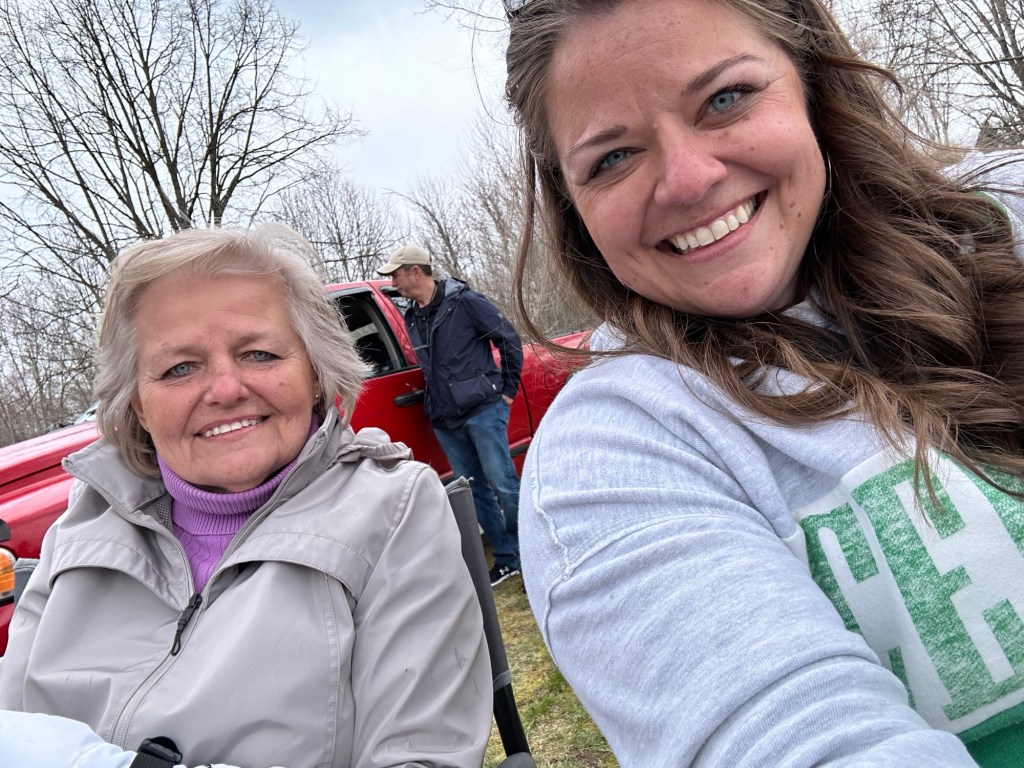
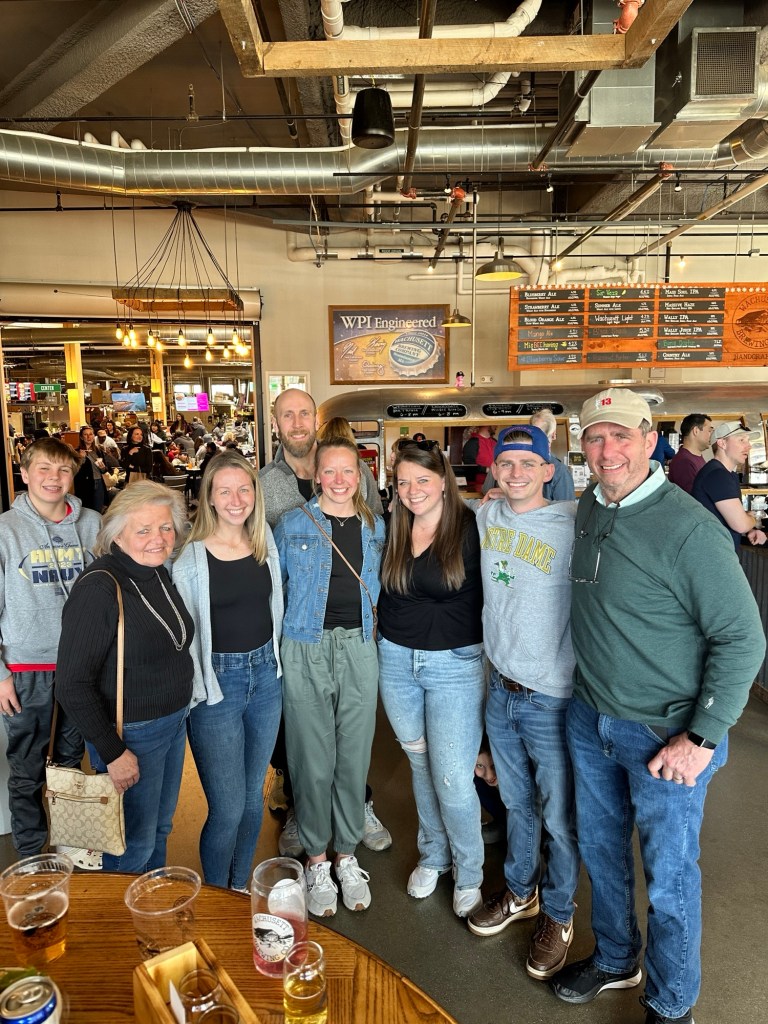
Next Up: Ask a Finn. This month, you’ll hear from my sister, Stephanie.
———————————————————————————————————————————————————–
Ask a Finn

————————————————————————
Steph, what does happiness look like to you?
My happiness has been evolving over the past few years…… I have this very vivid memory of maybe 10 years ago when I was apartment hunting with one of my best friends, Shannon, and we toured this great apartment. And at the time of the apartment tour, I envisioned what my life would look like. I’d have this really great job, a nice apartment in Boston, and I could read my favorite books in the cute little reading nook in the corner of the apartment. Fast forward – I got the apartment and what I envisioned actually happened; however I still wasn’t 100% happy. Once I got the new apartment, I tried to chase another accomplishment. The happiness finish line kept moving – I would achieve one thing and then try to achieve more.
This got me thinking – what really brings me happiness? I can answer that and it’s consistent with other responses you’ve read: family, friends, traveling, reading. But then I took a step back and thought.. What about family; what about travel actually brings me happiness? I haven’t been able to fully answer that question until recently when I was listening to a podcast (Frequency SHIFTING: How to SHIFT your vibration and change your life). This podcast talks about how we all have really high standards in life – who we want to be professionally; who we want to be personally; what do we expect from our partner, our family, our friends.. I think it’s great to have high standards for yourself, for your work, for relationships, but I did get to thinking, what happens when you lower the standards for happiness? What are the little things about family, friends, and traveling that bring me happiness on a daily basis? A few things that come to mind are…
- Getting on a flight and the seat next to me being empty. Or being upgraded.
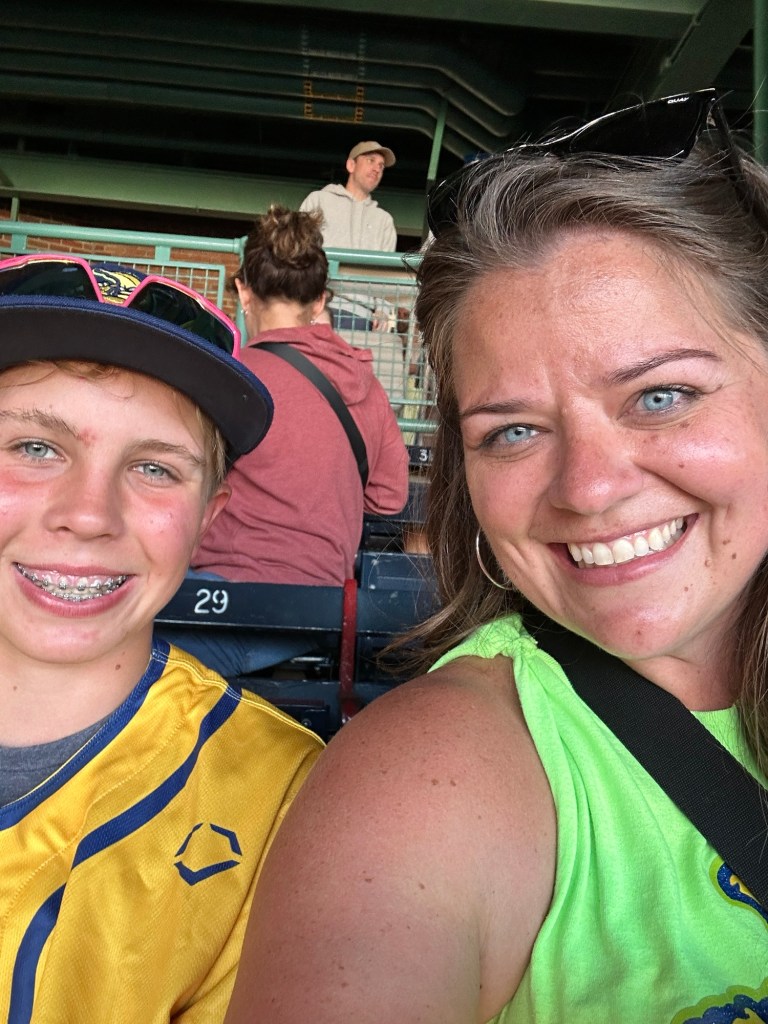
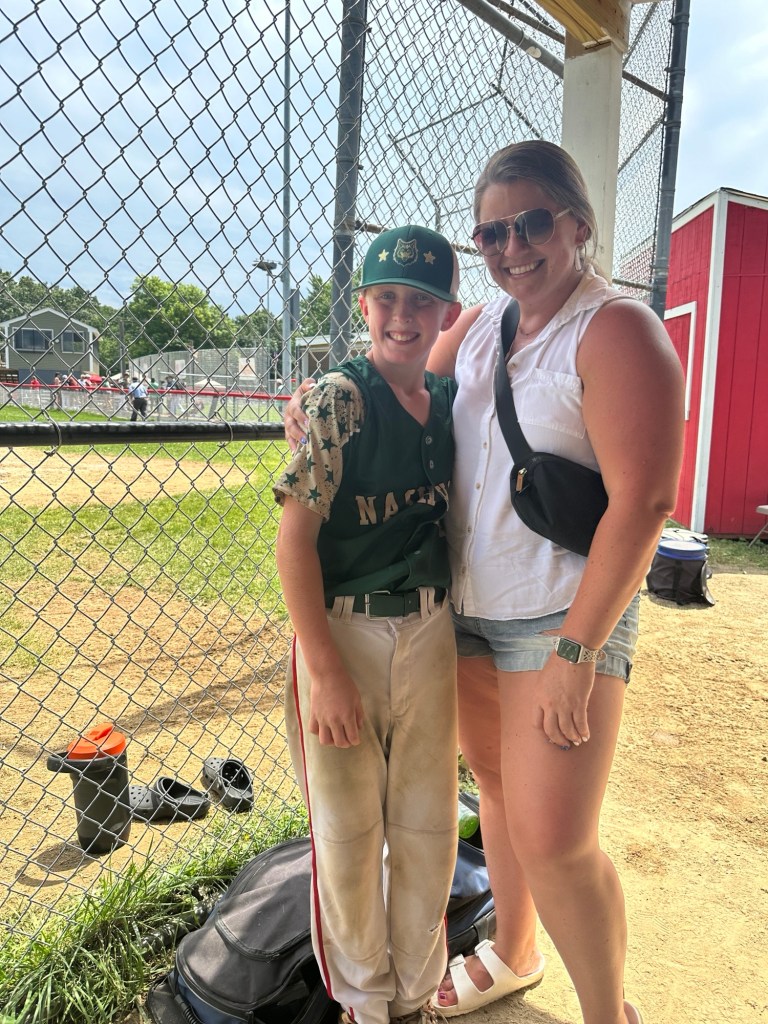
- Showing up to my niece and nephews’ games and getting a little wave and smile from them when they see you as they’re in the field.
- When I recommend a book to a friend and they say it was a fantastic recommendation. Or even better when they say “I read this book and think you’ll love it.”
So for me, these small, seemingly insignificant moments are really what bring me happiness. These moments truly have more of a positive and consistent impact on my happiness than the big ‘Instagram worthy’ moments.
Why are you proud to be Finnish?
I really appreciate the Finnish culture. It’s the happiest country in the world.. this is scientifically proven. But the Finns also have this concept of sisu. We’ve talked about happiness and what that means to me, but sisu is interesting because sisu does not have a direct translation to English. To me, sisu means:
- Persevering against all odds
- Overcoming tough times
- Doing the hard work
When I think about sisu, I also think about how my siblings and I were raised. My mom and dad used this ‘sisu’ mindset to raise us.
Growing up, my dad used to say “it takes no skill to be the hardest working person” or “it takes no ability to go the extra mile”… this resonated with me and I always carried the mentality to never take the easy way out. I remember when I was applying to colleges, I had been accepted to a bunch of schools, some of which offered significant scholarships, but I really wanted to go to Bentley University. I remember my dad saying “you can go to Bentley, but I don’t want to hear you complaining that it’s hard. It’s going to be hard, but you’ll need to figure it out.” I went to Bentley, and I didn’t complain to my dad about how hard the courses were – I studied hard and got through them.
And thinking about my mom, my mom had a lot of potential to have a successful career. She started her own business with my nana, but ultimately she chose a different career path – raising her kids, always making sure dinners were on the table, and that we all got to school and sports practices on time. My mom’s “I will get through the hard stuff of raising four kids” was her version of doing the hard stuff and this instilled a family-first mentality in all of us.
Our house was not littered with MVP trophies. We had a lot of hustle awards, coaches awards, leadership awards, unsung hero awards.. We were willing to do the hard stuff that others weren’t willing to do. As we got older, this mentality continued and showed up in our achievements. Collegiate athletes (Amanda, Danny and Sarah), which is something that’s really hard to do. Sarah was president of her senior class – this doesn’t just happen. And I was trusted at Bentley to run the biggest campus events.
Looking back as an adult and knowing more about our Finnish heritage, it’s evident that this mentality that has been instilled in us is who we are as people. At the end of the day, it was sisu. Our sisu helped us persevere and excel throughout different parts of our lives so far. And this complements how we were raised


—————————————————————————
Next up: Raffle time!
—————————————————————————
June Raffle Winner – Charity Cake!
Thank you for all of the donations!! During the month of June, we raised $340 for the Alzheimer’s Association.
THANK YOU to Weesh Bake Shop for donating the June charity cake and congrulations to our raffle winner, Amanda Cooke!
—————————————————————————
July / August Raffle
This month’s raffle has been generously donated by Steve Leibowitz. In August, we are raffling off FOUR tickets to the Patriots vs Seahawks 1PM game at Gillette on September 15, 2024 (Section 330, Row 15, Seats 13, 14, 15 & 16).

ALL raffle proceeds will be donated directly to the Alzheimer’s Association.
A BIG thank you to Steve for his generous donation. Steve unfortunately has been affected by Alzheimer’s.. and this past month we asked Steve a few questions about his experience with the disease.
How has Alzheimer’s impacted you, Steve?
My fraternal grandmother had Alzheimer’s; she was diagnosed at age 64. It was such a disheartening experience as she went from being confused and forgetful to about 10/12 years later ultimately not knowing who anyone was and slowly declined after than and then passed away another 10 years later.
What is your hope for the future?
I hope there is either better early detection or medication that could slow or reverse the overall disease.
Do you have any words of advice?
Keep an eye on those you love and don’t just assume that they are getting forgetful as they age – the early detection that is out there is key.
Your generous donation to the Alzheimer’s Association will provide critical funds for Alzheimer’s research and care. Thank you for your support!
To enter this month’s raffle, please follow the following steps:
- Follow the link to our Miles for Memories Team page: ALZ Fundraising Page
- Click the ‘Donate to the Team’ link
- Under ‘Team Gifts’, click ‘Donate to the Team’
- A $10 donation will result in 1 raffle entry. Additional $10 increments will result in additional raffle entries (example: $50 donation = 5 entries to the current month raffle). Prior month entries do not carry over into this month’s raffle.
- The deadline to enter this month’s raffle will be Friday August 23. The raffle winner will be announced in the month-end August blog post.
- Good Luck!!
 Miles for Memories