January (Tammikuu) 2024
This girl was
* born to run *
Thank YOU for visiting the Miles for Memories blog and reading my first blog post! I hope you enjoy reading the posts over the next eight months.

I’ll start by sharing how this whole idea came into play. I love to run.. like really love to run. A good playlist + running 5 miles on a beautiful fall day is one of my favorite things to do. A couple of years after hanging up the college basketball sneaks, I decided to follow in my dad’s footsteps and run marathons. Between 2013 and 2015, I ran five marathons (3 Boston, 1 Chicago, 1 DC Marine Corps). In 2018, things went international when I ran the Dublin Marathon. After Dublin and knowing marathons aren’t great long-term for my knees, I thought it would be special to run my final two marathons in Germany and Finland, as I am Irish, German, and Finnish. I successfully ran the Berlin Marathon in 2023 and I set the goal to run the Helsinki Marathon in 2024 with my sister, Sarah.
While Helsinki will be my final marathon, it also might be my most meaningful 26.2 mile run.
“Being Finnish” is something my family grew up talking about as it’s not very common; oddly enough, my dad is 25% Finnish and my mom is 100% Finnish. For many years, it was just something we talked about, but with my mom’s Alzheimer’s diagnosis in 2023, it has taken on new meaning for us. “Sisu” is a Finnish word that loosely translates to a cluster of traits that include courage, bravery, willpower, stoic determination, tenacity, and resilience. My mom and my family members have always displayed a lot of sisu, but especially during 2023.

Entering 2024 and thinking of my family’s Miles for Memories initiatives, some things I hope to accomplish this year are….
Personal happiness: 2023 had some highs & it also had some lows. I know everyone has ups & downs, but entering the new year, I want to be intentional about focusing on things that bring me happiness and I want to share that happiness with others. Finland has consistently been ranked the happiest country in the world…. so one of my goals is to be the best and hopefully happiest version of myself by the time I run through the streets of Helsinki in August.
Raise Alzheimer’s awareness & funds: There is currently no cure for Alzheimer’s and the disease is unfortunately becoming more common. As I learn more about Alzheimer’s, I want to share some of that knowledge with others and raise awareness and funds for the Alzheimer’s Association.
“Finnish” marathons: This is my marathon finale! I cannot think of a better marathon course to end my marathon run on. I can’t wait to share training updates and the actual Helsinki marathon experience with you all.
I know the ups & downs will pop up throughout 2024, but I am very confident that my sisu + the support from all of you, my family & friends, will help me be successful in these #2024goals.
————————————————————————
Next up: Alzheimer’s 101: Alzheimer’s Impact on the brain
————————————————————————
Alzheimer’s 101 – Impact on the Brain
Did you know that someone in America develops Alzheimer’s disease every 65 seconds?
Today there are ~7 million Americans living with Alzheimer’s. If no cure or significant medical breakthrough is made, this statistic is projected to double to 13 – 16 million Americans by 2050, and individuals will be developing the disease every 33 seconds (compared to every 65 seconds today).
In the short period of time that I’ve had a direct connection to Alzheimer’s, I’ve learned how devastating the disease is. While a person can look completely “normal” and “healthy” on the outside, Alzheimer’s is slowly deteriorating the individual’s brain.
How exactly does Alzheimer’s impact the brain?
At a high-level, Alzheimer’s leads to nerve cell death and tissue loss throughout the brain. This impairs the brain’s functioning and size. The disease starts in the hippocampus section of the brain, a crucial region for memory and learning. Over time, Alzheimer’s affects areas in the cerebral cortex, which is responsible for language, reasoning, and social behavior. Eventually, many other areas of the brain are damaged and stop working normally.
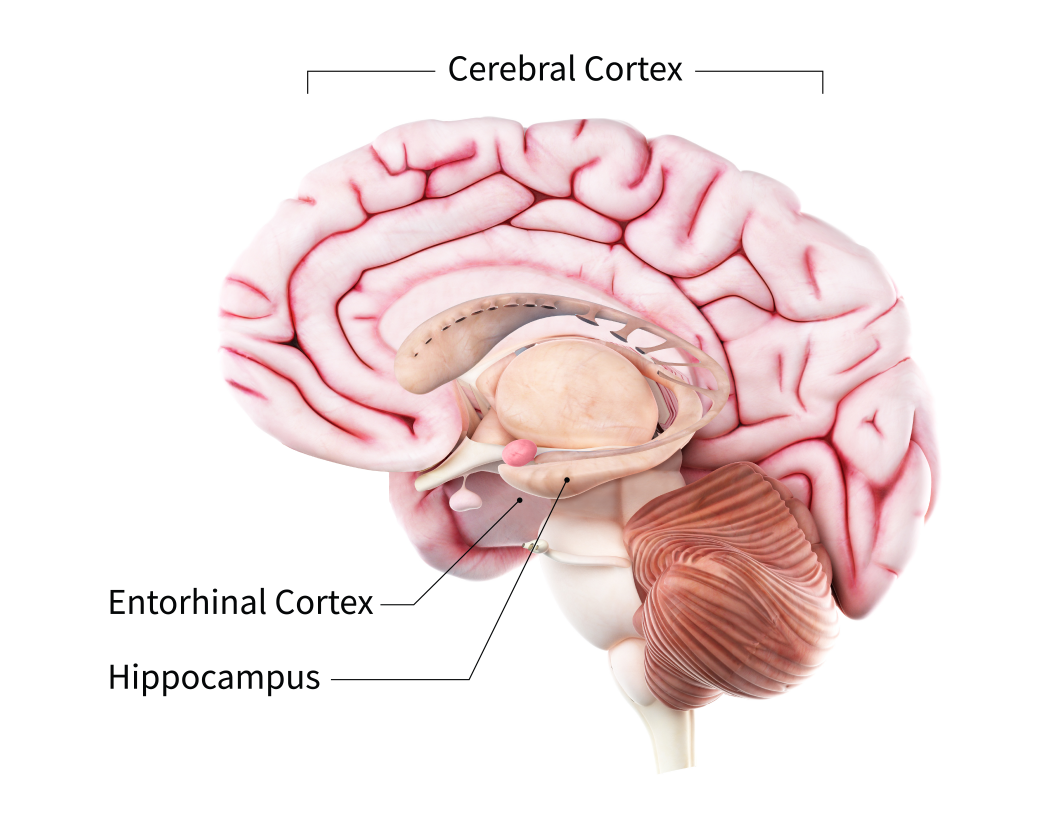
Scientists believe nerve cell death is caused by the formation of abnormal protein clumps called beta-amyloid plaques and tau tangles. Plaques and tangles build up, disrupt communication between brain cells, and contribute to the progressive cognitive decline seen in Alzheimer’s patients.
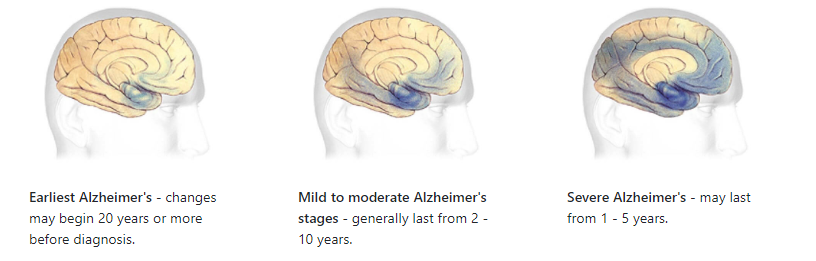
Plaques and tangles, which are the blue-shaded areas in the photo below, spread through the cortex in a predictable pattern. As the disease progresses, the person with Alzheimer’s gradually loses their ability to live and function independently. The disease is ultimately fatal, though the rate of progression varies. On average, a person with Alzheimer’s lives four to eight years after diagnosis, but can live as long as 20 years, depending on various factors.
Early diagnosis is critical. While there currently is no cure, there are medications that can slow the progression of Alzheimer’s. Early diagnosis allows the medications to be more effective.
In next month’s blog post, I’ll talk about Alzheimer’s symptoms.
Next Up: Ask a Finn, featuring the leader of our #GramFam, my dad.
Ask a Finn

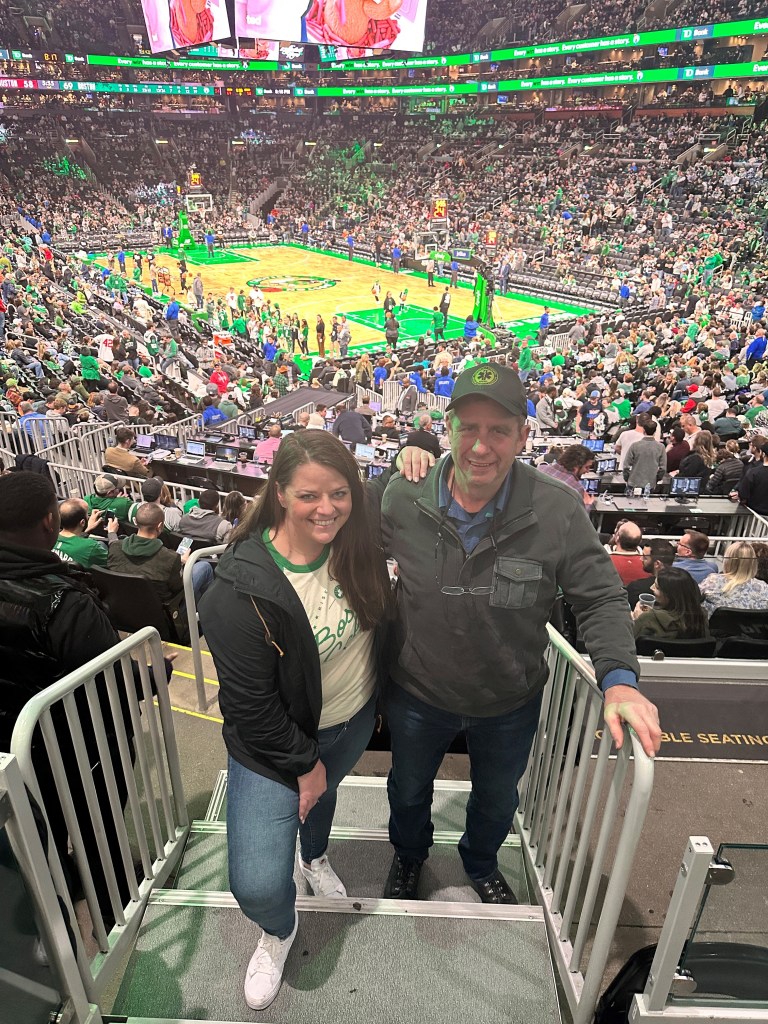
The first Ask a Finn features my dad, Dan Gram
————————————————————————
What does happiness look like to you, dad?
I think happiness changes to some extent throughout life… Starting out as an adult, I think money is always a focus, but then you reach a point where you realize you’re not invincible and you’re not going to live forever; things change.
My perspective may be different from others…. but being married for 43 years with four kids, family is happiness. As a father, you want your kids to get along and you want your kids to do the right thing. If your kids have problems, or something bad happens, you take that on as a parent as well and that can impact happiness. For example, when our kids started driving, we’d wait up until our kids got home.. or if a call comes in when the kids are out, you’re thinking about what the first word will be. I mean, as a parent, you’re happy if your kids are happy. Your mother and I also sacrificed financially with your mom staying at home with the kids. That allowed someone to always be at home while raising kids. It was the right decision for us.. I wouldn’t change a thing.
The same applies to siblings and my extended family. You want to see everyone do well and be happy.
Now that my kids are adults, it still applies. I want to help where I can. Stephanie just bought a house; she did it on her own, but I was able to provide some advice.. seeing that success makes me happy. We now have four grandkids and a son-in-law… we think of them the same way as our kids.. we want things to go well for them, for them to have fun, too. .
I’m now also able to do things I wasn’t able to do while raising kids. I like all the volunteering I do – Leominster Emergency Management, volunteering at the food pantry, getting involved with the Coast Guard – I have a lot of fun with this stuff, but I couldn’t do this 30 years ago. I also enjoy going to my grandchildren’s events.
For me, nothing has ever been wrapped around money. It’s always be focused on the home and family. And I wouldn’t change anything.
What does the Finnish culture mean to you?
I think the Finns are respected as a country; they recently joined NATO – shows they’re respected. But yeah, I have a lot of respect for Finns. They stay focused; they don’t complain about small details; they figure things out and get it done. Pretty quiet individuals. I think the key thing about Finns is hard work – they don’t complain if a problem arises, they come up with a solution..
Kathy (wife) is 100% Finnish. She displays these qualities. We’ve been married for 43 years – not many people make it that long. She’s loyal, stayed home with the kids, we got through some tough times. She always sacrificed a lot without complaining… I remember she made a comment 5-6 years ago “we did a good job raising the kids”, which is evident as the kids are now successful, happy adults.
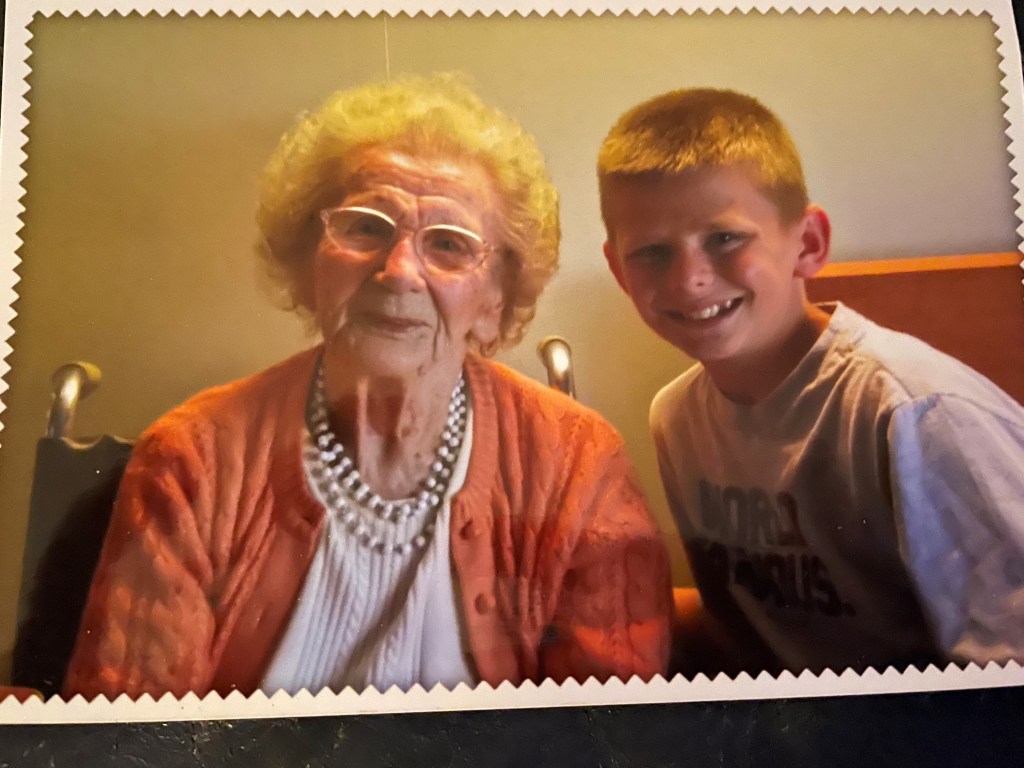
My grandmother (Kaino) was also 100% Finnish. My siblings and I spent a lot of time going to my grandparents’ home; every time we went over there, we had a lot of fun. As an adult, I remember her telling me that on her first day of school, she didn’t know any English. She taught herself – again if a problem arises, Finns figure it out. She went through a lot; she outlived her husband and her two sons… she lived until 104 and she was very sharp right until the end.
Final question, Dad. You have run 20 marathons. Why did you start running marathons?
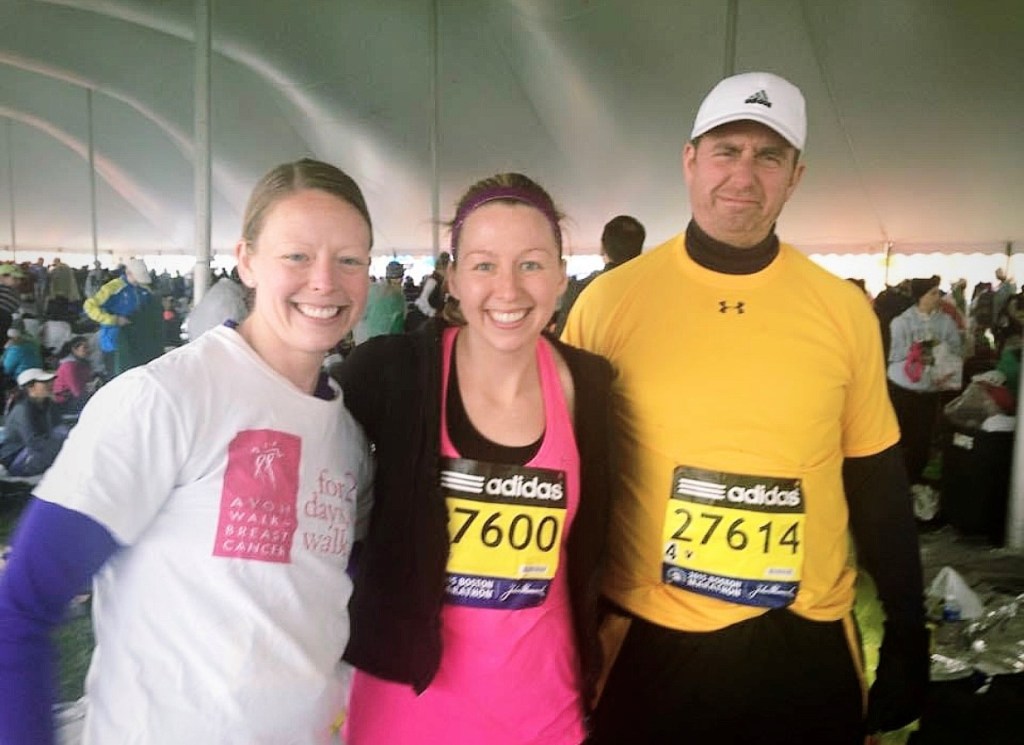
I can’t remember why I ran the first one. I just went and did it. I finished in 4:34. When I was 3 miles from the finish line, someone from the med tent told me to stop. I told them no, I wasn’t stopping. I would walk to the finish line if I had to; I finished…. and then I just kept running them. It was something to do and I kept wanting to do better and get a better time. I ran Boston 17 times; I like Boston. My brother and brother-in-law also ran some Bostons with me. It was a lot of fun.
I took a marathon break for about 10 years…. and then in 2013, I was at the Boston marathon and witnessed the bombings. Kathy and I were across from the first bomb… I decided to run in 2014 in honor of the 2013 marathon bombing victims. I ran again in 2015 and then my final marathon was in Boston in 2016.
Final question (for real)… did marathons bring you happiness?
When I was done, yes. At Mile 20, no. Once you finish though, you’re glad you put yourself through all the training.
————————————————————————
—————————————————————————
Next up: Raffle time! Let’s raise some funds for the Alzheimer’s Association.
—————————————————————————
January Raffle
This month’s raffle is for TWO TICKETs to the Boston Celtics game against the Detroit Pistons on Monday March 18, 2024. All proceeds will go directly to the Alzheimer’s Association.
These tickets were generously donated by Charlie Noonan. Charlie was my AAU basketball coach in high school and has been a mentor throughout my adulthood.
Charlie is president of BCG Connect (BCG Connect | Creative Marketing for Fundraisers), which is headquartered in Wilmington, MA.

To enter the raffle, please follow the steps below:
- Follow the link to our Miles for Memories Team page: ALZ Fundraising Page
- Click the ‘Donate to the Team’ link
- Under ‘Team Gifts’, click ‘Donate to the Team’
- A $10 donation will result in 1 raffle entry. Additional $10 increments will result in additional raffle entries (example: $50 donation = 5 entries to the Jan raffle).
- Under the ‘Donor Recognition’ section, type “Name – January Raffle” (example: Amanda Grammel – January Raffle).
- The deadline to enter the January raffle will be Friday February 16. The raffle winner will be announced in the February blog post.
- Good Luck!! And Go Celts!
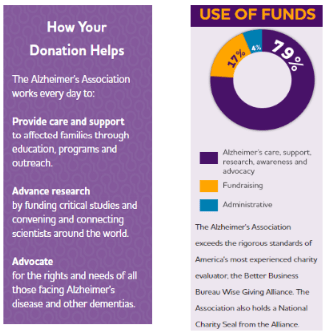
Charlie’s close family friend, Louise, was diagnosed with Alzheimer’s. Your generous donation will provide critical funds for the Alzheimer’s Association to provide care and support to Louise, her family, and all those who are battling this devastating disease.
Thank you for your support! See you all in February!
Sources
“Alzheimer’s Disease Facts and Statistics.” Fisher Center for Alzheimer’s Research Foundation, http://www.alzinfo.org/understand-alzheimers/alzheimers-disease-facts-and-statistics/. Accessed 28 Jan. 2024.
“Brain Tour.” Alzheimer’s Disease and Dementia, http://www.alz.org/alzheimers-dementia/what-is-alzheimers/brain_tour. Accessed 28 Jan. 2024.
 Miles for Memories
